


Expandable Barriers Buying Guide
Expandable barriers are designed to enhance safety and security in workplaces, shops, schools, and events. Available in high‑visibility designs, they are quick and easy to deploy when spills or hazards occur.
This guide covers everything you need to know before buying a temporary expandable barrier. We’ll explore the pros and cons of different types, key features to look for, and what to check before making a purchase. Whether you need a lightweight plastic barrier that can be put in place after cleaning, or a heavy‑duty metal barrier to restrict pedestrian access to off‑limits areas, this guide will help you choose the best solution.
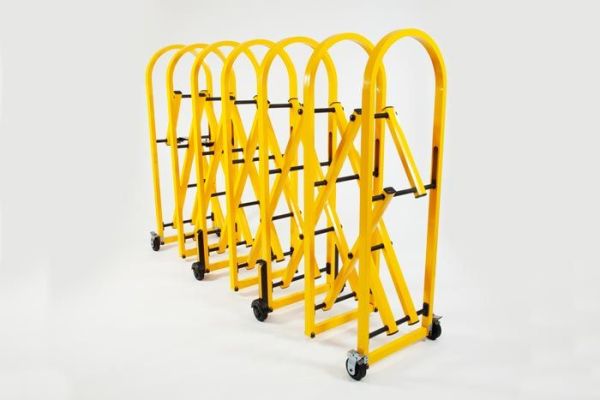
Extendable mobile barriers are designed to temporarily restrict access to areas, highlight hazards, and discourage pedestrians from entering restricted zones. They are commonly used in commercial and industrial settings, including shops and schools to mark off spillages, in buildings to restrict access where maintenance is being carried out, and at events to control the flow of pedestrian traffic.
These portable barriers are available in a variety of styles and designs, with plastic, steel, and aluminium options. Their collapsible design makes them quick and easy to use, as well as compact for storage.
Expandable barriers offer a range of features to meet user requirements, including high‑visibility designs, interlocking solutions to cover larger areas, lightweight portable options with carry handles, and barriers on wheels to allow them to be easily moved into position.
What To Check
Consider whether the barrier will be used indoors, outdoors, or both — water‑filled or metal solutions are generally best for outdoor use.
Check the size of the area you need to cover — for larger areas, interlocking solutions are available to help you reach the required width.
For low‑traffic and indoor areas, plastic solutions are normally sufficient. For high‑traffic areas, metal barriers are generally recommended.
Retractable Barriers Tips & Recommendations
For outdoor use, it is important to choose a barrier that can withstand the elements. We recommend water‑fillable or sand‑fillable barriers, or alternatively, metal barriers.
For areas with high pedestrian traffic, or where security is a concern, we recommend interlocking metal expandable barriers. These barriers are supplied with keys that allow you to lock several units together, preventing unauthorised users from retracting or moving them.
Things to consider
Extendable barriers can be used to cover various widths up to their maximum extension. Interlocking solutions are also available for larger areas.
Most barriers offer a high‑visibility design. For barriers that will be used at night, we suggest choosing a model with reflectors.
If you need to lift and move the barrier, check that the weight is suitable and meets your manual handling requirements. Barriers with wheels are also available.
Plastic barriers are generally lighter, while steel or aluminium solutions are more heavy‑duty.
Check the stored size of the barrier is suitable for the area in which you plan to store it. Most solutions are highly compact and collapsible.
For high‑traffic areas, or when you need additional safety, a barrier with brakes and a locking mechanism with key may be preferable.
For vehicles with low ground clearance, aluminium ramps are typically the most suitable option. They offer a smoother, more gradual gradient than rubber ramps, reducing the risk of scraping or damage during loading. Available in a variety of lengths, aluminium ramps are versatile and can be used to load cars onto vans, trailers, containers or car showrooms. Manufactured in Italy, these ramps can be customised if required.
In contrast, rubber ramps provide a cost-effective solution designed primarily for creating smooth transitions over kerbs, driveway entrances, and container thresholds. Their durable, weather-resistant construction allows them to remain outdoors year-round. Along with loading cars, rubber ramps are also commonly used for loading motorbikes, ride-on mowers, and trailers.
Types of Extendable Barriers
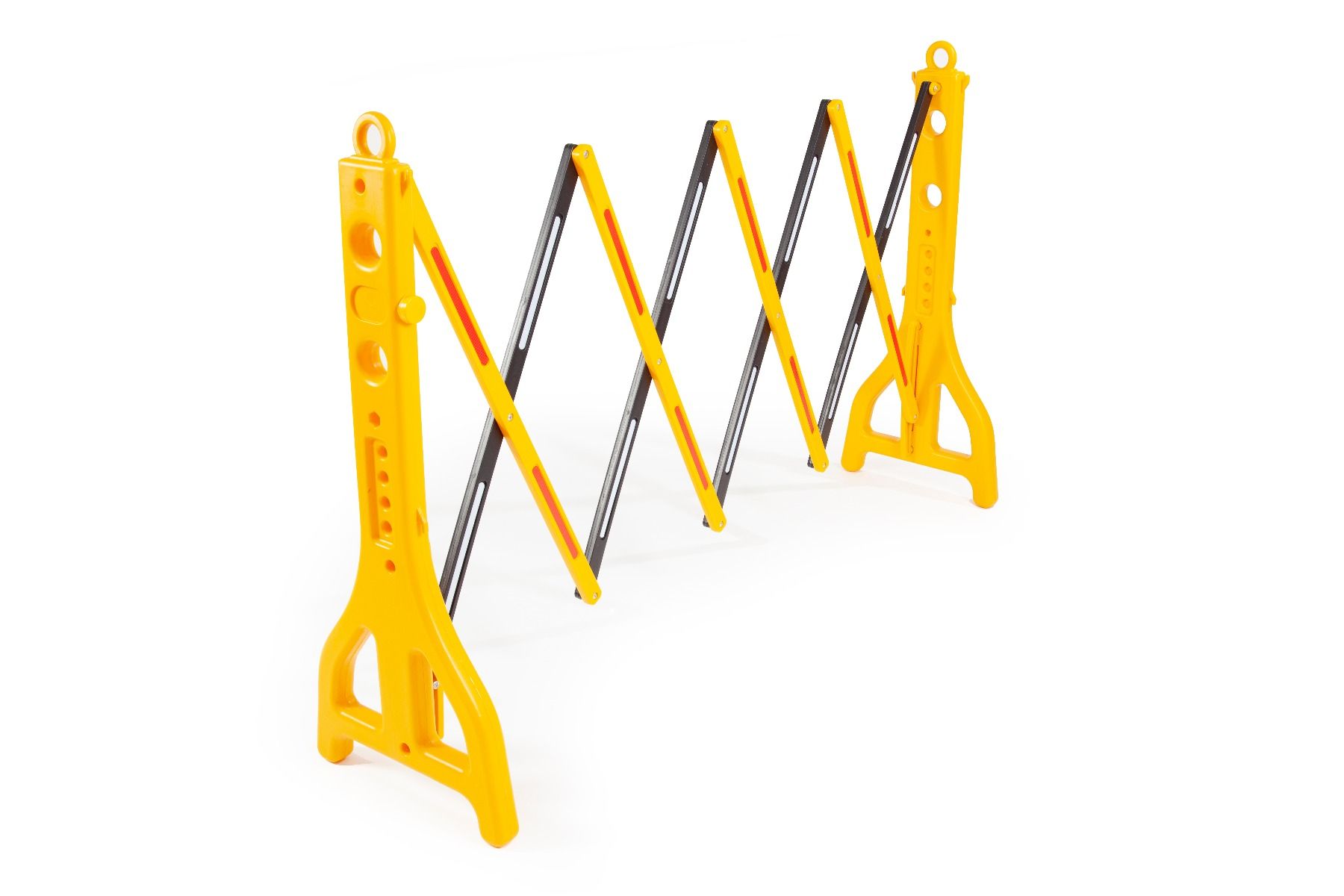
- Expands up to 2.3m
- High‑visibility yellow and black design with reflective tape
- Simple design, quick and easy to deploy
- Plastic lightweight design, only 7kg
- Indoor or outdoor use
- Highly compact with carry handle
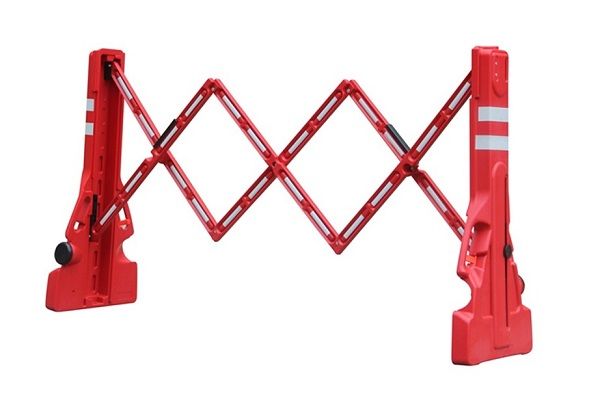
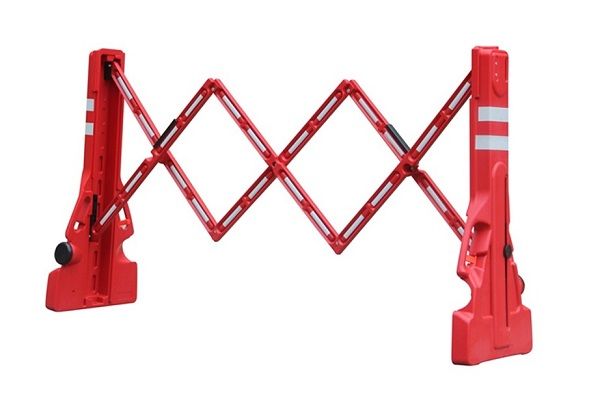
- Expands up to 2.3m
- High-visibility red and white design with reflective tape
- Fill with water or sand to enhance security
- Plastic lightweight design, only 7.5kg
- Indoor or outdoor use
- Highly compact with carry handle
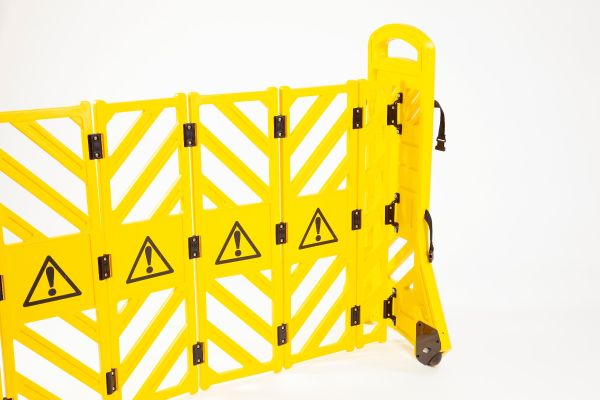
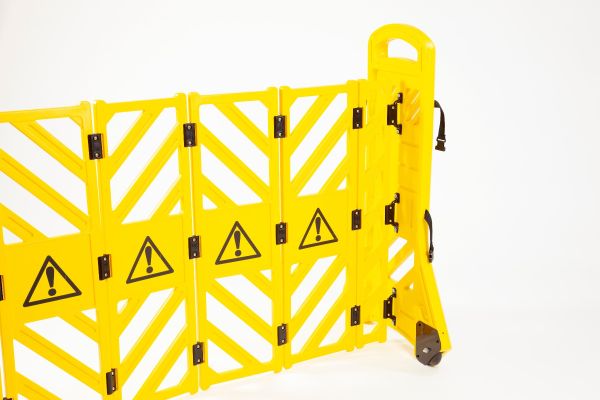
- Expands up to 3.8m
- High-visibility yellow design with hazard markings
- Provided with brakes for enhanced security
- Plastic lightweight design, only 16kg
- Indoor or outdoor use
- Easy to move, provided on wheels
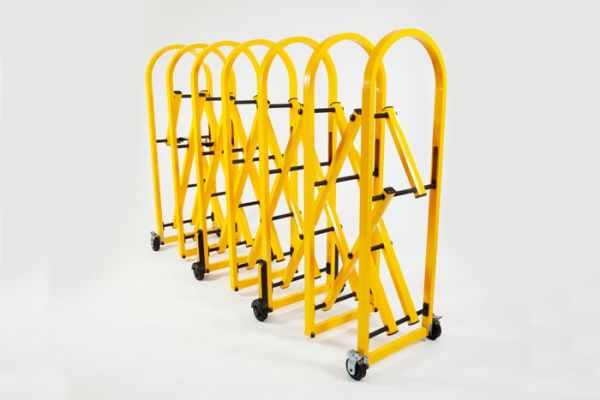
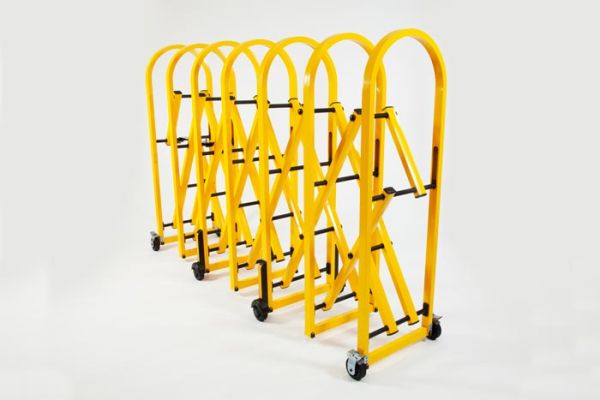
- Expands up to 4m
- High-visibility yellow design
- Provided with brakes for enhanced control
- Interlocking design, secured with keys
- Indoor or outdoor use
- Easy to move, built‑in wheels
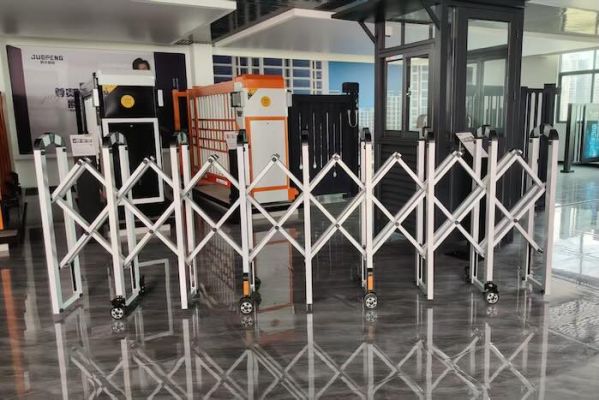
- Expands up to 4m
- Silver with orange strips for visibility
- Coated grip sections for ease of handling
- Interlocking design, secured with keys
- Indoor or outdoor use
- Easy to move, built‑in wheels
Plastic Barrier
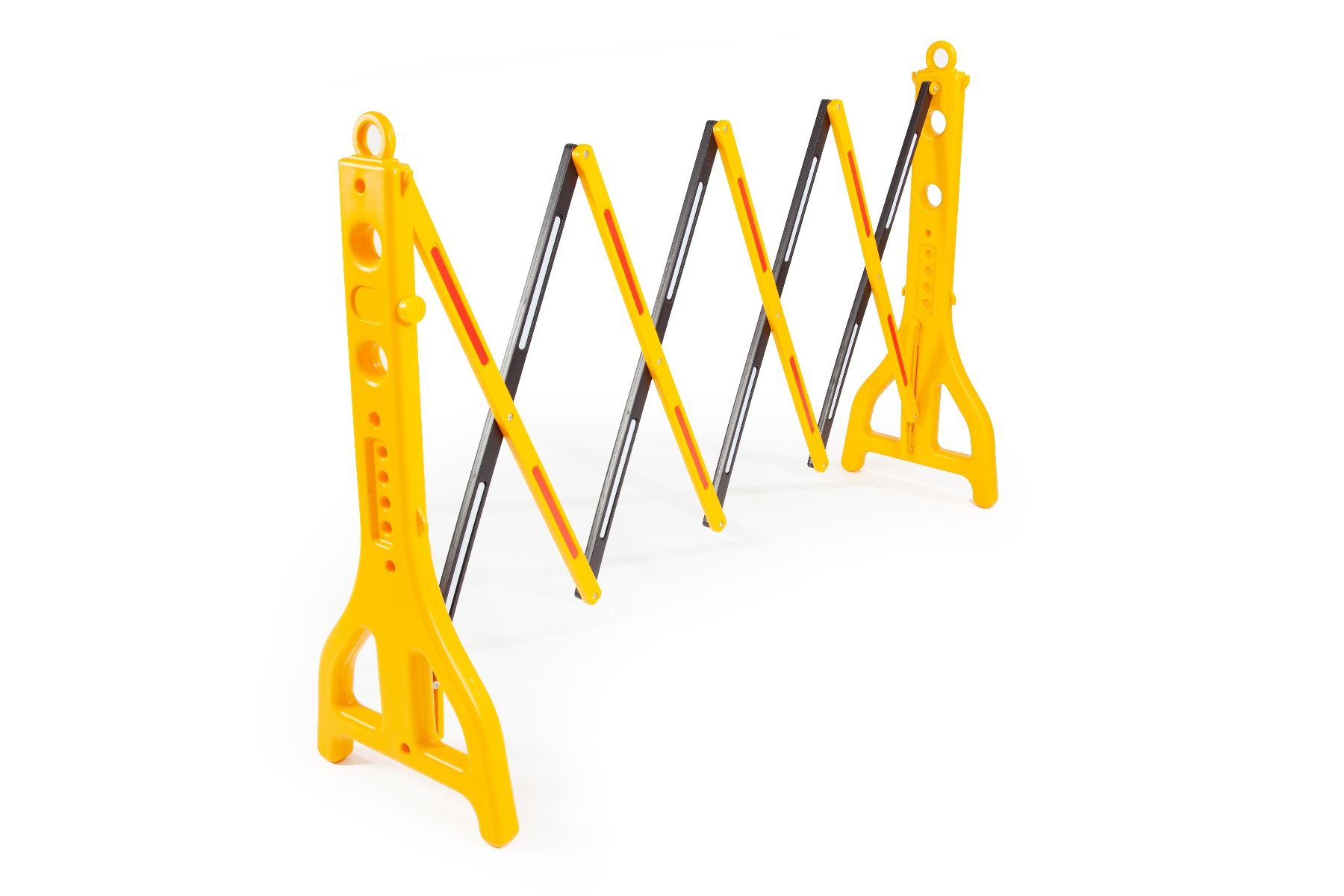
- Expands up to 2.3m
- High‑visibility yellow and black design with reflective tape
- Simple design, quick and easy to deploy
- Plastic lightweight design, only 7kg
- Indoor or outdoor use
- Highly compact with carry handle
Aluminium Expandable Barrier
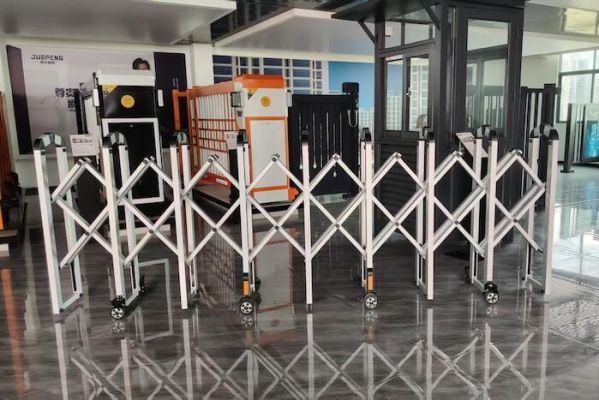
- Expands up to 4m
- Silver with orange strips for visibility
- Coated grip sections for ease of handling
- Interlocking design, secured with keys
- Indoor or outdoor use
- Easy to move, built‑in wheels
Water-filled Barriers
- Expands up to 2.3m
- High-visibility red and white design with reflective tape
- Fill with water or sand to enhance security
- Plastic lightweight design, only 7.5kg
- Indoor or outdoor use
- Highly compact with carry handle
Plastic Barrier on Wheels
- Expands up to 3.8m
- High-visibility yellow design with hazard markings
- Provided with brakes for enhanced security
- Plastic lightweight design, only 16kg
- Indoor or outdoor use
- Easy to move, provided on wheels
Heavy Duty Metal Safety Barrier
- Expands up to 4m
- High-visibility yellow design
- Provided with brakes for enhanced control
- Interlocking design, secured with keys
- Indoor or outdoor use
- Easy to move, built‑in wheels
Using Expandable Barriers Safely
- Barriers are regularly used to enhance safety on sites and within businesses; however, if they are not used correctly, they can become a hazard.
- When barriers are used in a public area or commercial site, it is important that a risk assessment is undertaken to ensure the barrier is appropriate for the location.
- We recommend ensuring that the barrier does not restrict access to essential areas such as fire escapes. Where barriers are used on a pathway or pavement, it is important to make sure there is still sufficient space for pedestrians, wheelchair users, and mobility scooters to pass safely.
- When purchasing a barrier, it is important to ensure it is highly visible to prevent trips and to ensure those with limited vision can see the barrier clearly.
- It is also important to ensure the barrier is suitable for the specific environment. For example, The Ramp People’s range of expandable barriers is designed for use only in pedestrian areas. They are not suitable for restricting vehicle access and have not been tested to withstand the force of vehicles.
- Please note that these barriers are not intended for crowd control, so they should not be leaned on or subjected to heavy force.
- Where a barrier is used in the workplace, if it needs to be lifted, it is essential to comply with manual handling requirements.
Where to Use Expandable Safety Barriers
- Expandable barriers are a popular choice across a wide range of industries. Examples include:
- Factories – Highlight hazards such as spills
- Schools – Restrict access while maintenance work is taking place
- Festivals and events – Restrict pedestrian access to out‑of‑bounds areas
- Shops – Corner off areas when breakages or spills occur
- Offices – Highlight wet floors after cleaning
Assembling, Positioning & Use
- The majority of our extendable barriers are provided fully assembled, or can be assembled in just a few moments. The barriers are designed to be quick to deploy — simply move the barrier to your preferred location and extend it to the required length. Where an interlocking barrier is chosen, multiple units can be connected together easily
- If you need any support using your barrier, please contact our team.
Request a callback
Still need assistance? Our team is available throughout the week to help via phone, email, live chat or WhatsApp. If you’d rather we call you, you can easily request a callback here.