

Portable vs Permanent Wheelchair Ramps: Pros and Cons
Choosing Between Portable and Permanent Wheelchair Ramps
- Wheelchair ramps play a vital role in improving accessibility for wheelchair users, mobility scooter users, and those with limited mobility. Choosing between a portable, semi-permanent, or permanent ramp depends on several factors, including how often the ramp will be used, the location, available space, and budget.
- Whether you're seeking to improve accessibility at home, creating a safer workplace or ensuring your shop or business is accessible to those using mobility aids, identifying the most suitable access ramp can be a challenge. With a wide range of ramps available, including portable ramps, semi-permanent ramps and permanent ramps, it can be difficult to decide the best solution for you.
- Within this article we will examine the pros and cons of temporary, semi-permanent and permanent access solutions.
Types of Wheelchair Ramps
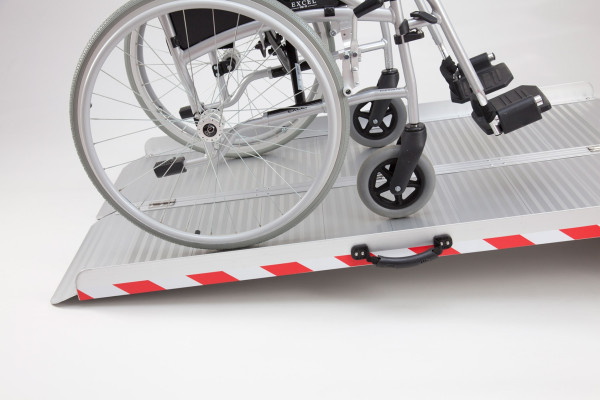
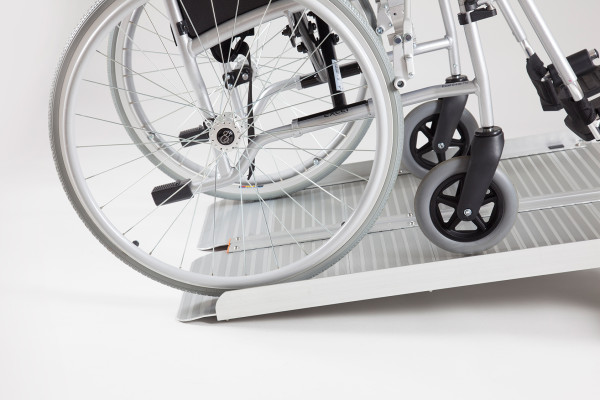
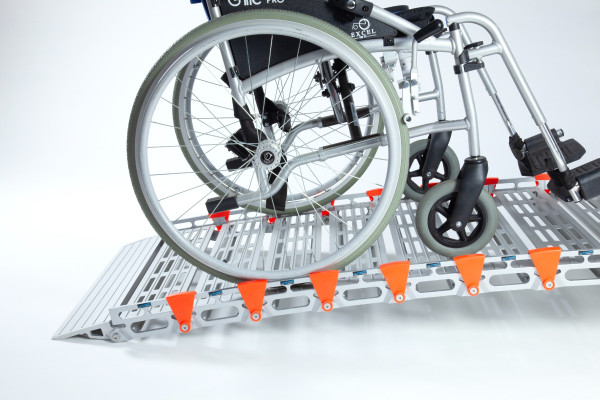
- Portable Wheelchair Ramps - Available in telescopic, folding and non-folding designs, temporary ramps for wheelchairs simply rest on a step, kerb or doorway without requiring installation. They are generally intended as temporary access solutions and can be positioned when needed and stored away afterwards. Some products, such as rubber threshold ramps and wheelchair ramp kits with handrails, can also be used as semi-permanent solutions as they can be left in place for extended periods or moved as required. Portable ramps are commonly used by individuals at home and companies seeking to make their business accessible.
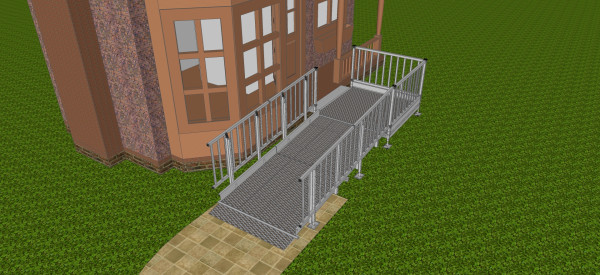
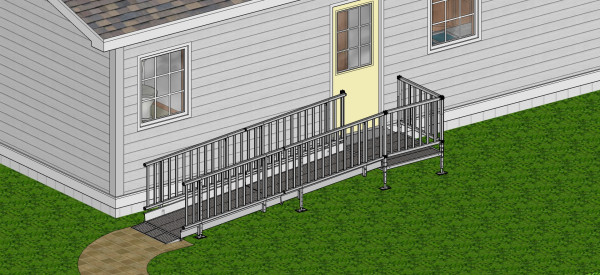
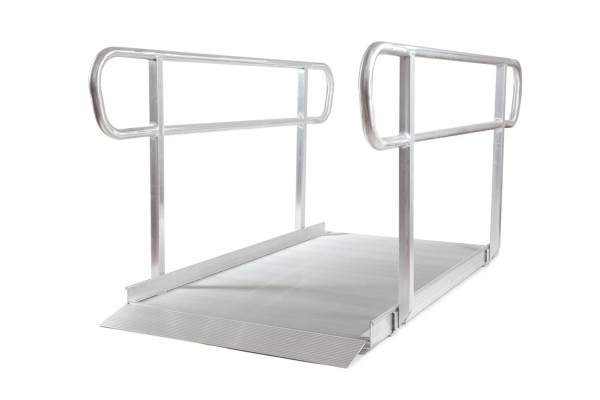
- Semi-Permanent Wheelchair Ramps - Semi-permanent ramps, such as modular wheelchair ramps, are typically fixed in place or left in position for months or years. Usually manufactured from aluminium, steel or timber, these ramps provide a long-term accessibility solution while retaining the flexibility to be removed or relocated if required. They are commonly used by businesses in leased premises and homeowners who require an accessible entrance without undertaking major building work.
- Permanent Wheelchair Ramps - Permanent ramps are designed to remain in place for many years and are often constructed from concrete as part of the property's structure. These ramps are typically chosen where a long-term accessibility solution is required and may be subject to planning permission and building regulations, depending on the property and installation. Permanent ramps are commonly installed at residential properties, public buildings and commercial premises where reliable step-free access is needed.
Real-World Examples: Choosing the Right Ramp Solution
- The best ramp solution often depends on how long it will be needed and the environment in which it will be used.
- For individuals recovering from surgery or injury who only expect to use a wheelchair for a few weeks or months, a portable ramp is often the most cost-effective option. Portable ramps can be deployed when needed and stored away once mobility improves.
- For those living in rental accommodation, a portable or semi-permanent ramp is often used, especially if tenants have not secured permission from the landlord for building modifications or for flats with shared access.
- For those with long-term mobility impairments, a portable ramp is likely to be purchased for temporary use until a modular (semi-permanent) or permanent ramp can be installed. The semi-permanent or permanent solutions provide safe, independent access to and from the home without requiring carers or family members to position and remove a ramp each time it is used. In many cases, a permanent or semi-permanent ramp can significantly improve day-to-day independence and quality of life.
- For businesses operating from leased premises, a semi-permanent modular ramp can be an ideal solution. For example, a company with a two-year lease may benefit from a modular access ramp because it typically does not require planning permission, can be removed when the lease ends, and provides reliable accessibility throughout the tenancy.
- For a public building such as a library or hospital, a permanent ramp is often installed as the ramp is likely to be in place for the foreseeable future. .
Advantages of Portable Wheelchair Ramps
Ideal for those seeking a solution for use in multiple locations. Many models fold to allow the ramps to be taken in the car.
No building modifications required or professional installation, simply put in place and start using.
Portable ramps are generally much cheaper than permanent access solutions.
In some instances a permanent ramp is not possible, for example due to a pavement or shared pathway.
Off the shelf solutions, perfect for those who require a ramp quickly if they have just been discharged from hospital.
Temporary portable ramps are generally not subject to the same building regulation requirements as permanently installed access ramps.
Disadvantages of Portable Wheelchair Ramps
For those overcoming multiple steps and higher heights, a long ramp is generally required for a smooth gradient. The longer ramps can be heavier and harder to store making them less 'portable'.
In high-traffic areas, portable ramps can be seen as a trip hazard if not highlighted correctly.
Many users are unable to lift and move the ramps themselves and are therefore reliant on a family member, friend or carer putting the ramp out each time, in turn limiting independence.
Advantages of Semi-Permanent Modular Ramps
Whilst portable wheelchair ramps are an excellent temporary solution, modular wheelchair ramps offer greater convenience for long-term use. As the ramp remains installed, users can access their home or workplace independently without needing assistance to position a ramp each time. Modular ramps can also accommodate greater heights, include handrails and landings for added safety, and can be adapted or relocated if accessibility requirements change in the future. For buildings where modifications are not permitted, such as listed buildings on those in conservation areas, modular ramps can be the perfect way to provdie access whilst protecting the building's structure.
The majority are available to purchase with handrails, making them suitable for assisting a wider range of users.
Choose solutions with multiple turning platforms to fit your property.
Designed to last for years with little maintenance required.
Provides independence for users as the ramp is always available, no need for manual lifting of ramps.
The modular ramps can be removed if needed, for example if selling the property or undertaking renovations.
Suitable for use in high traffic areas including buildings with regular pedestrian traffic.
Disadvantages of Permanent Semi-Permanent Modular Ramps
Hiring a handyman or builder incurs additional costs.
Many designs are not 'off the shelf' and the lead time is generally several weeks.
Generally designed for your property and therefore most are unable to be used in other locations.
Advantages of Permanent Ramps
Whilst concrete wheelchair ramps provide a durable, permanent access solution, they offer less flexibility than modular metal ramps. Concrete ramps are generally more expensive and disruptive to install, cannot easily be relocated, and may require planning permission or building regulation approval.
Generally manufactured from concrete, the ramps last for decades.
Suitable in areas with high pedestrian traffic and for commercial sites loading other goods and equipment.
Many view the concrete options as more aesthetically pleasing than metal solutions.
Safe to use in all weathers when constructed with suitable drainage.
Does not offer any flex and provides a solid feel for optimum security for users.
Built specifically for your site, the design can be tailored to your requirements.
Disadvantages of Permanent Ramps
Permanent ramps generally require planning permission which can take time.
Concrete ramps require excavation and groundworks which take time.
Permanent ramps cannot later be moved to an alternative site if you later move home.
Calculating The Ramp Length
1. For portable ramps, for assisted manual wheelchairs we would recommend a minimum gradient of 1:6. For example, for a 1 foot rise (load height) you'll need a 6 foot long ramp.
2. For unassisted wheelchairs, mobility scooters and walkers we recommend a minimum gradient of 1:8. For example, for a 1 foot rise (load height) you'll need a 8 foot long ramp (Mobility scooter ramps need to be longer due to the low ground clearance).
3. For modular wheelchair ramps, the maximum gradient they can accomodate is a 1:10 gradient however a 1:12 or 1:15 is usually recommended.
4. For permanent wheelchair ramps, generally a gradient of 1:12, 1:15 or 1:20 is recommended. The required gradient does depend on the type of property and the height you wish to overcome.
Need more help? Contact our team for free advice. We can recommend the most suitable portable, modular, or permanent wheelchair ramp based on your height requirement, available space, and mobility aid.
Wheelchair Ramp Length Calculator
At The Ramp People we offer an extensive range of portable ramps and semi-permanent ramps. If you require assistance choosing the right ramp for your property or workplace please contact us. If you are seeking a permanent ramp which complies with building regulations, please contact our team for assistance.
Types of Portable Wheelchair Ramps
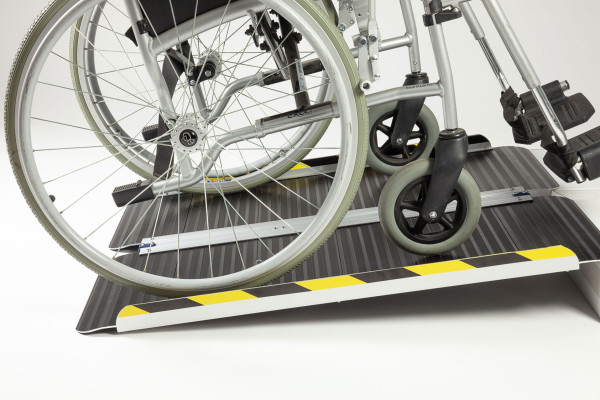
- Effortlessly folds for storage, built on carry handle
- Full width non-slip surface provides extra safety
- Seamless transition from the ground onto the ramp
- Easy to use, simply rest onto the step or kerb
- Suitable for most mobility aids
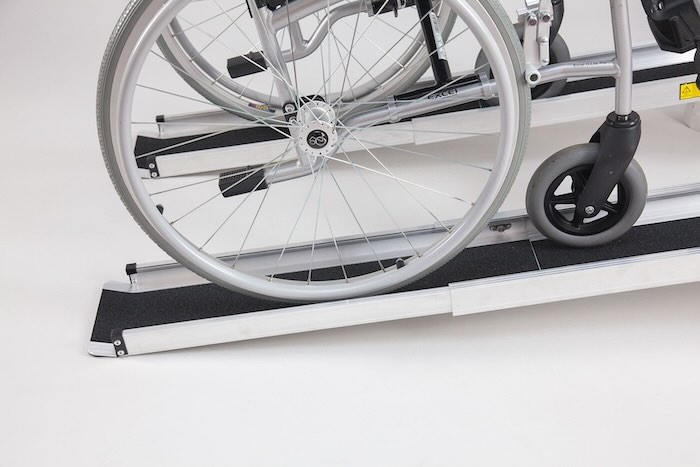
- Extremely lightweight for easy transport
- Telescopic design for compact storage
- Safety edges and an anti-slip surface for optimum safety
- Easy to use, line up the wheels and start using
- Perfect for narrow doorways
- Designed for indoor or outdoor use, can be left outside
- Available in an extensive range of lengths up to 20ft
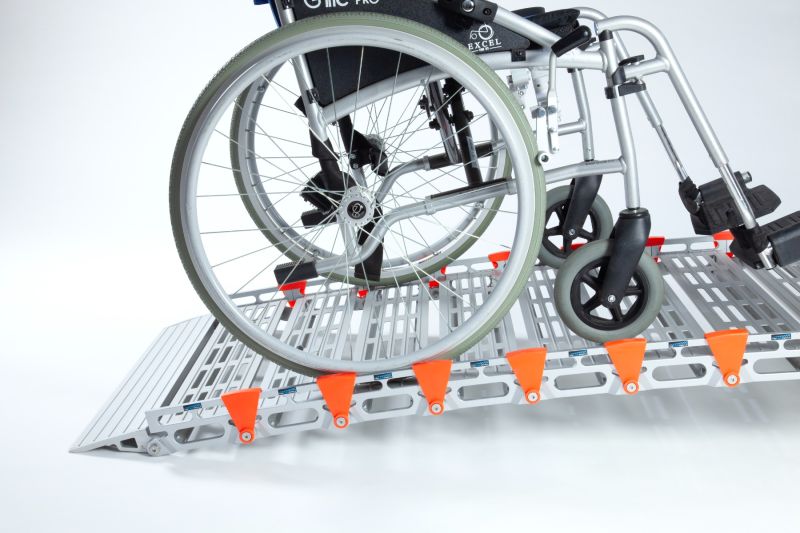
- Rolls and splits for easy storage and transportation
- R13 slip resistance surface for optimum grip
- Use as a straight ramp or bridge doorways and thresholds
- Available in heights from 4mm to 203mm
- Anti-slip surface, designed for all weathers
- Easy to use, simply put in place
- Higher heights are quite heavy so usually left in place
- The width can be adjusted to fit your space
Folding Wheelchair Ramps
- Effortlessly folds for easy storage, built on carry handle
- Full width non-slip surface for extra safety
- Safety edges to enhance safety
- Easy to use, simply rest onto the step or kerb
- 300kg capacity, TÜV tested
- Suitable for most mobility aids
Telescopic Wheelchair Ramps
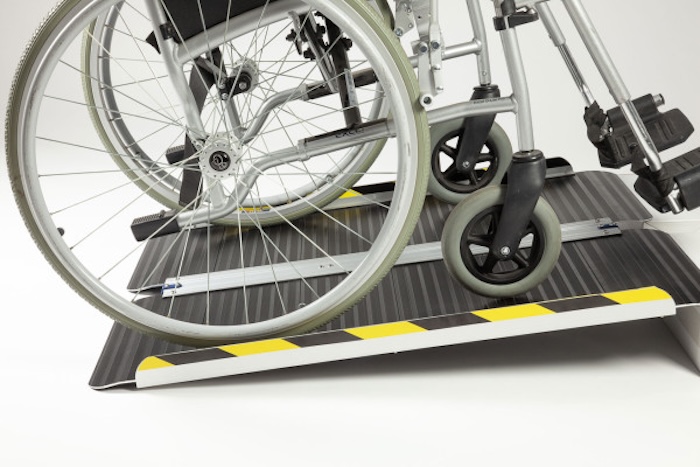
- Extremely lightweight easy transport
- Telescopic design for compact storage
- Safety edges and an anti-slip surface for optimum safety
- Easy to use, simply unslide the ramps, line up the wheels and start using
- Perfect for narrow doorways
RollAble Ramps
- Indoor or outdoor use, can be left outside
- Extensive range of lengths up to 20ft
- Purchase with or without handrails
- Rolls and splits for easy storage
- R13 slip resistance surface for optimum grip
- Use as a straight ramp or bridge doorways and thresholds
Rubber Threshold Ramps
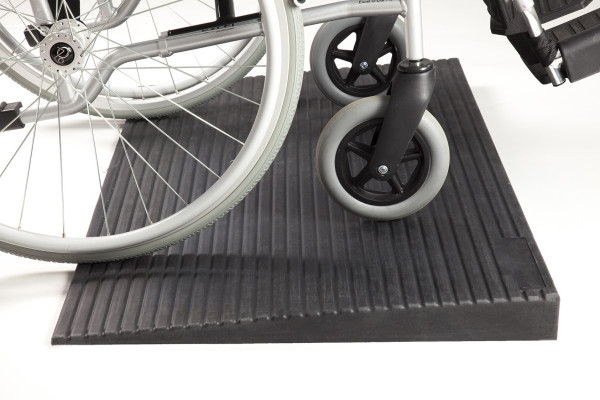
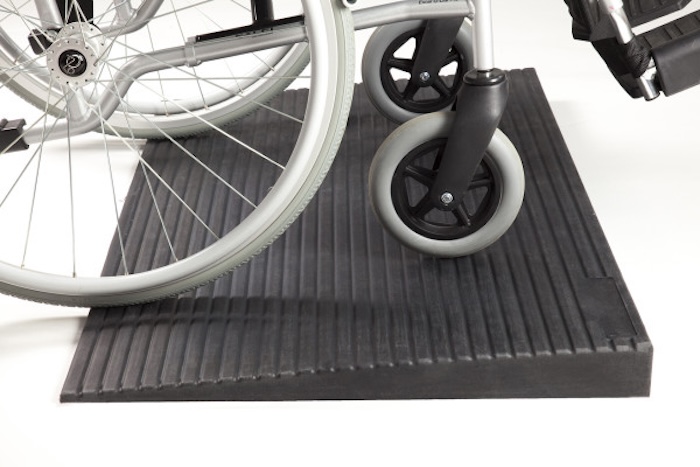
- Available in heights from 4mm to 203mm
- Anti-slip surface, designed for all weathers
- Easy to use, simply put in place
- Higher heights are quite heavy so usually left in place
- The width can be adjusted to fit your space
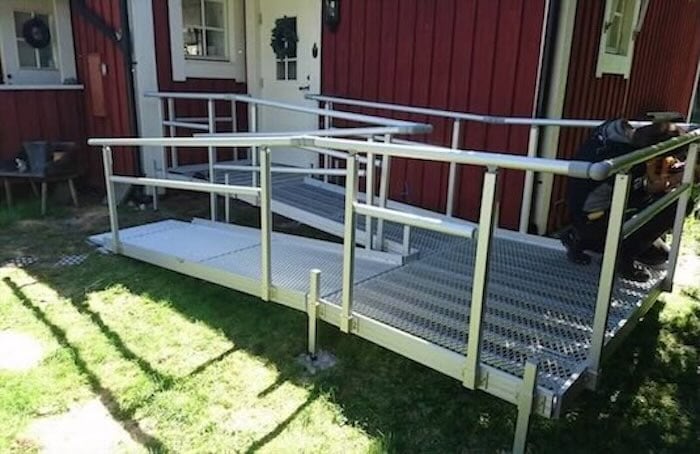
Our range of modular ramps include aluminium and steel modular ramp kits which are available with or without handrails. As the modular kits can be built to order, we recommend speaking to our team regarding your requirements. To learn more, view our guide on finding your perfect modular wheelchair ramp/a>.
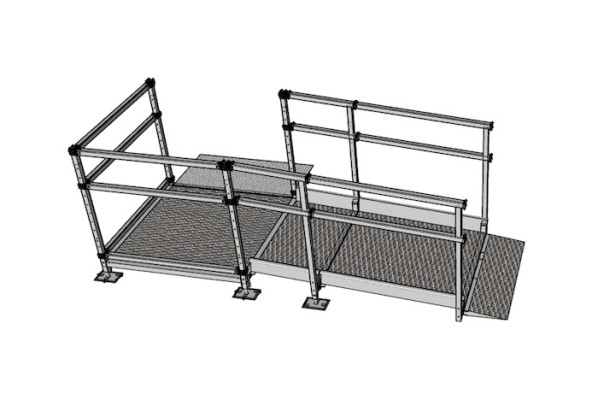
Types of Semi-permanent Wheelchair Ramps
- 1080mm or 1500mm wide
- Available with standard or balustrade handrails
- Modular design to fit your property
- 2-year warranty
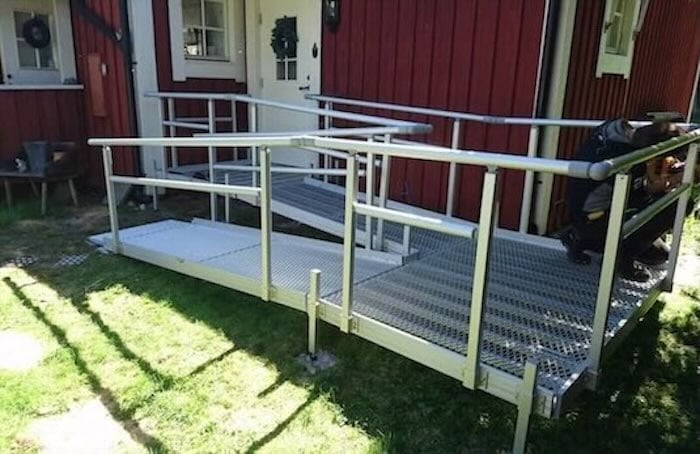
- 900mm or 1300mm useable width
- Available with or without handrails
- Modular design to fit your property
- 3-year warranty
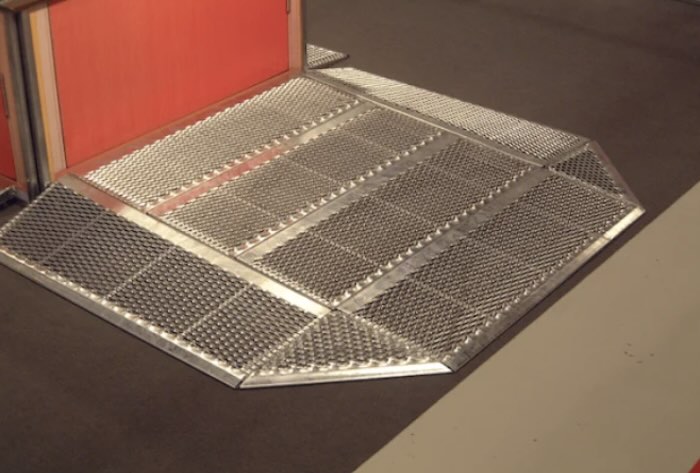
- Designed for lower heights
- Use in areas where the user needs to take a left or right turn
- 2-side and 3-side kits
- 2-year warranty
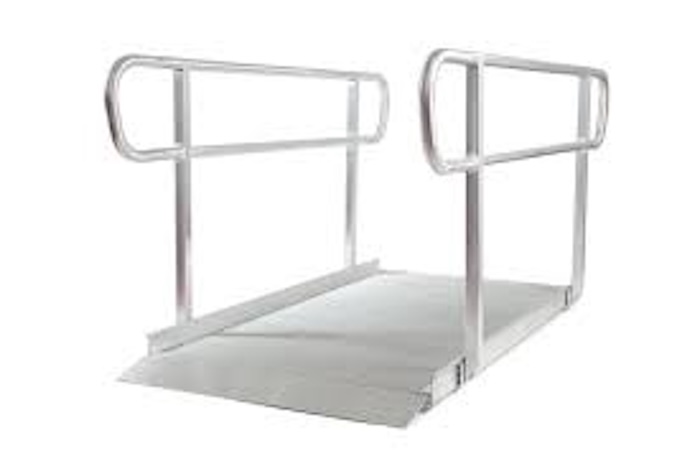
- Available in lengths from 2ft - 12ft
- Purchase with or without handrails
- Easy to install with just two fixing points
- The ramp can also be used as a portable solution
Steel Modular Ramp Kits
- 1080mm or 1500mm wide
- Available with standard or balustrade handrails
- Modular design to fit your property
- 2-year warranty
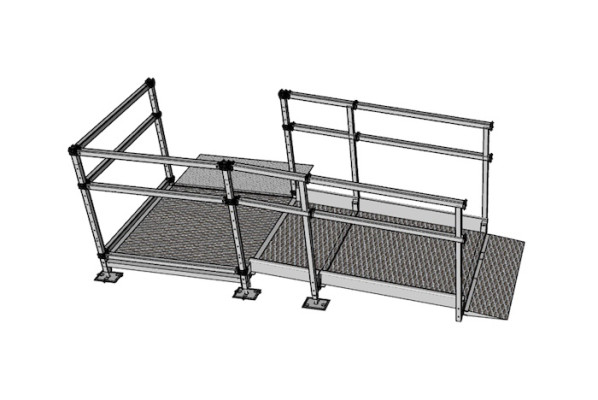
Aluminium Modular Ramp Kits
- 900mm or 1300mm useable width
- Available with or without handrails
- Modular design to fit your property
- 3-year warranty
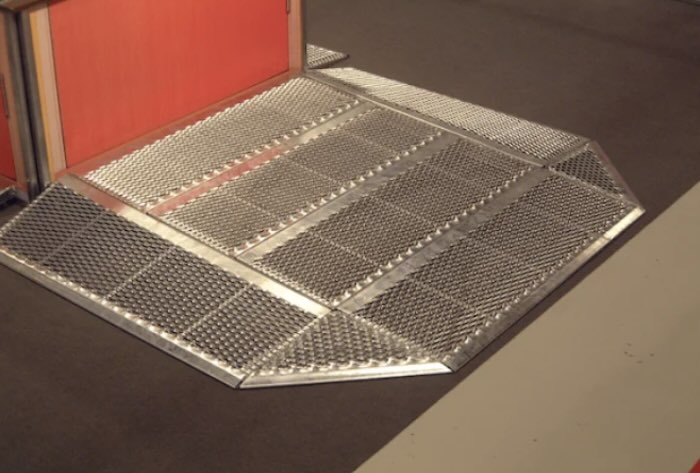
Mini Ramp
- Designed for lower heights
- Use in areas where the user needs to take a left or right turn
- 2-side and 3-side kits
- 2-year warranty
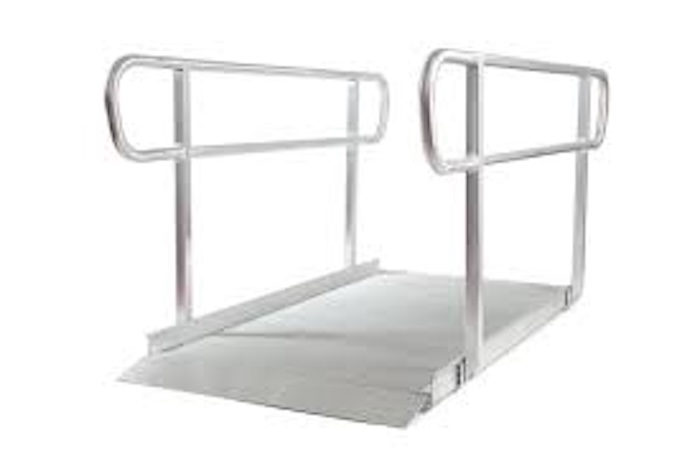
Wheelchair Ramp Kit with Handrails
- Available in lengths from 2ft - 12ft
- Purchase with or without handrails
- Easy to install with just two fixing points
- The ramp can also be used as a portable solution
Claiming VAT Relief
VAT relief is available across all of our mobility aids including wheelchair ramps, threshold ramps, half steps, rollators, wheelchairs. In the UK, people with long-term disabilities do not have to pay VAT on mobility aids. Registered charities also do not have to pay VAT on these items. When you add the item to your basket simply complete your VAT exemption details in the VAT relief box to purchase the ramp without the VAT. It is a self-declaration, we simply require the user's full name and disability. You do not need to send over any paperwork as evidence, nor do you need to be registered as disabled or claim benefits.
Request a callback
Still need assistance? Our team is available throughout the week to help via phone, email, live chat or WhatsApp. If you’d rather we call you, you can easily request a callback here. Additional guidance can be found within our Wheelchair Ramp Buying Guide.