

Evacuation Chairs - Fire Safety and Accessibility
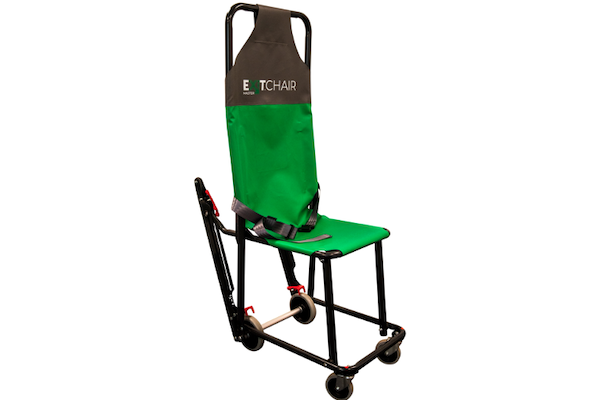
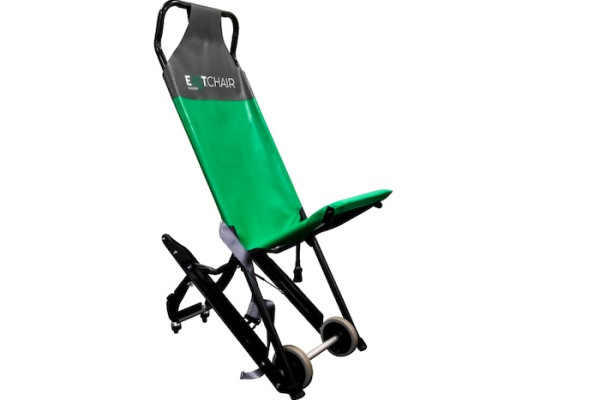
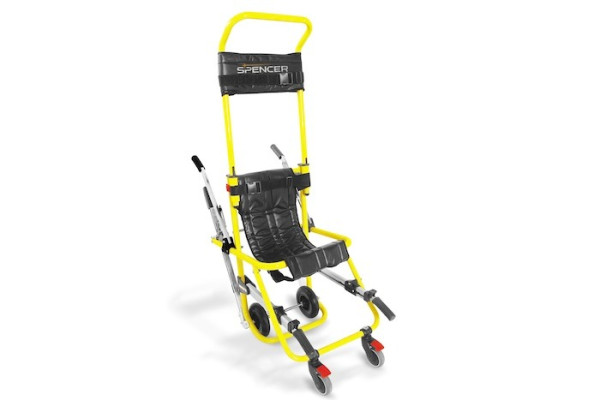
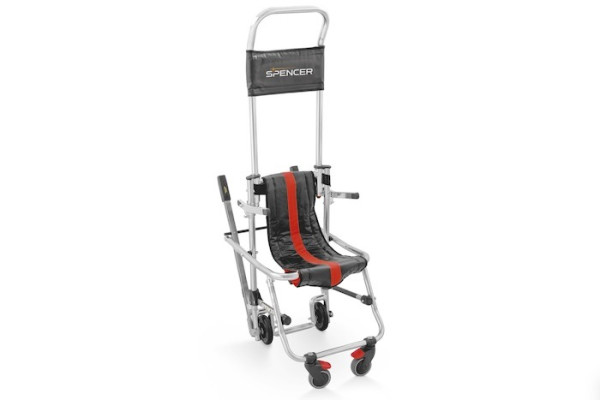
Evacuation chairs are essential safety devices designed to help individuals with limited mobility, disabilities, or injuries safely navigate stairs and exit a building during emergencies. They are typically installed as a precautionary measure in multi-storey buildings, residential flats, commercial premises, schools, hospitals and workplaces.
When conducting a fire safety risk assessment for commercial or public buildings, it is crucial to ensure the premises are fully accessible. In the event of an emergency—such as a fire, explosion, power outage, or other critical incident — everyone must be able to evacuate the building quickly and safely.
Are Evacuation Chairs legally required?
Evacuation chairs are not a legal requirement. However, those responsible for a building—such as the owner or landlord—must regularly carry out a fire risk assessment. This assessment should identify what measures are necessary to keep people safe during a fire or other emergency.
A fire risk assessment involves evaluating risks and taking steps to remove or reduce them. It should include an emergency plan and provide training for staff to handle emergencies. Key considerations include emergency routes, warning systems, and staff preparedness.
As part of the evacuation plan, it is essential to ensure that everyone in the building can exit safely. Evacuation chairs are one option to help meet this obligation, particularly for assisting individuals with limited mobility in multi-storey buildings.
What legal considerations should be made around Evacuation Chairs?
In Ireland, the Safety, Health and Welfare at Work Act 2005 requires employers to identify hazards, assess risks, and maintain a written risk assessment, including a fire risk assessment.
When conducting a fire risk assessment it is important to identify ways to prevent fires, along with ensuring emergency escape plans are in place for all who may be in the building, including those with disabilities.
The Building Regulations 2010 Part M provide guidance on fire escapes, while BS 9999:2008 – Code of Practice for Fire Safety in the Design, Management and Use of Buildings outlines how to ensure buildings are inclusive and accessible, including fire escape strategies.
Under the Equality Act 2010, employers must make reasonable adjustments for people with disabilities.
In line with manual handling guidelines, operators should be trained to safely use the evacuation chairs. Disability evacuation etiquette training should also be undertaken.
In addition to the above, it is also important to consider the operator of the evacuation chair and ensure they are safe. Companies should ensure evacuation chairs are suitable, safe and regularly inspected.
Planning for safe evacuation
Plans should be undertaken to consider the safe evacuation of those with limited mobility or disabilities in the event of an emergency. The plans should consider whether the person may be in a building, the types of escapes available and the buildings systems such as their fire alarm.
For sites where there is a known individual who may require assistance during an evacuation, a Personal Emergency Escape Plan (PEEPs) should be created. For example, this may be a staff member who is regularly located on site or an individual who regularly visits the premises. Generally, the HR department or building manager will work with the individual to create an PEEPs. The plan will be tailored to the individual and may include an emergency stair chair.
A standard plan should also be created for buildings where there are visitors or casual users of the building. These are generally written procedures that are provided at the building's entry or reception point to ensure the disabled person knows how to exit the building in an event of an emergency.
Plans should also be made for unknown or uncontrolled visitors, for example, in public buildings such as shopping centres, restaurants and retail parks. Staff should be trained to provide assistance to disabled users if an evacuation is required.
Where should Evacuation Chairs be stored?
Fire evacuation chairs should be easily accessible during an emergency. We recommend storing them close to a staircase for quick deployment.
These chairs are compact and foldable, making them suitable for wall-mounted storage near the top of the staircase. Covers and wall brackets are available to keep them secure and protected.
Important: Chairs must never obstruct staircases or access routes.
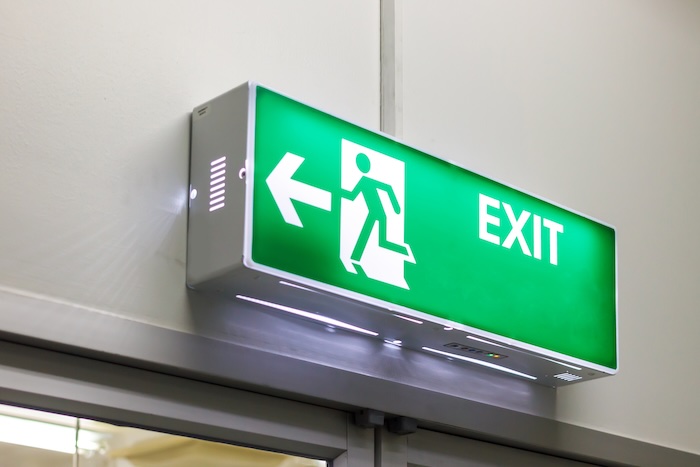
What should I consider when choosing an Evacuation Chair?
When choosing an evacuation chair, firstly, it's important to check the chair is fit for purpose. We would suggest checking the emergency chair is registered as a class I medical device and / or complies with the EU Medical Device Regulations (MDR).
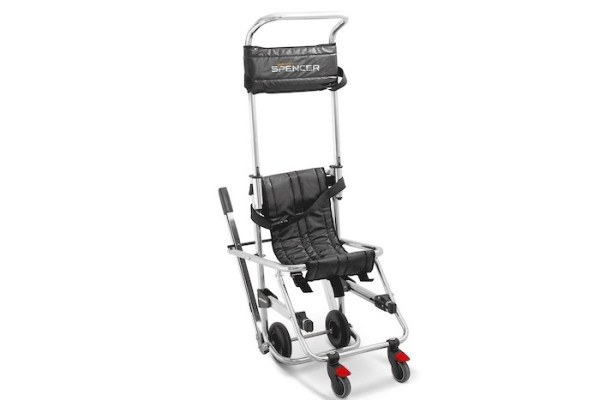
- Check the chair's capacity, for bariatric use you may prefer to select an option with a 250kg capacity such as the Spencer PRO SKID-E Evacuation Chair.
- Consider where the chair will be used, if it is for narrow staircases, consider selecting a chair which is narrow enough for the area it will be used in.
- Check the stored size and ensure this is suitable for where you wish to store the chair
- Consider whether it can be operated by one or two people and whether you have the staff available to operate the chair
- If you require the chair to be used to go up and down stairs, for example if you have rooms located in the basement, you will need an Evacuation Chair which can go up and down staircases such as the Spencer PRO SKID-E Evacuation Chair
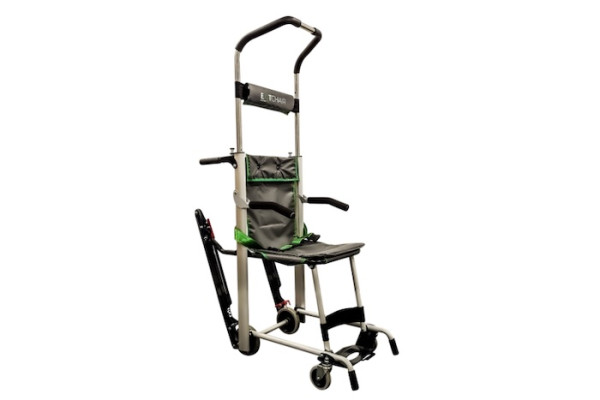
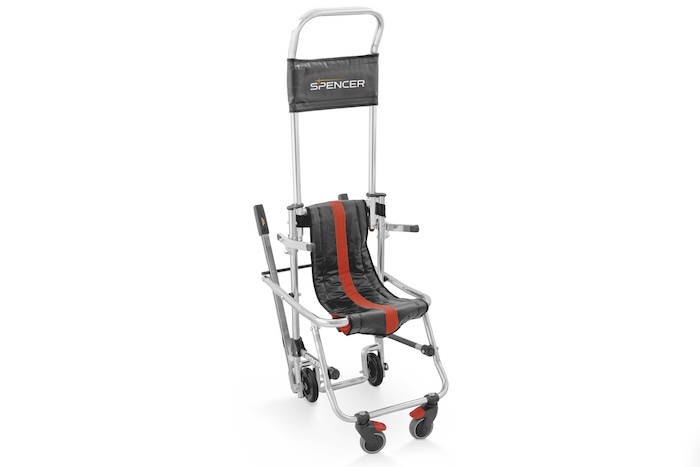
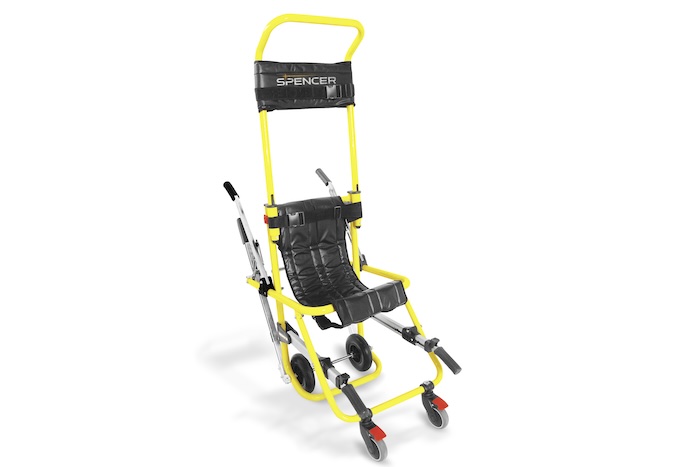
- Additional considerations are the comfort of users, for example some evacuation chairs, such as the Versa Elite Evacuation Chair and Spencer SKID-OK Evacuation Chair, offer footrests and armrests
Emergency Evacuation Chairs - Key features
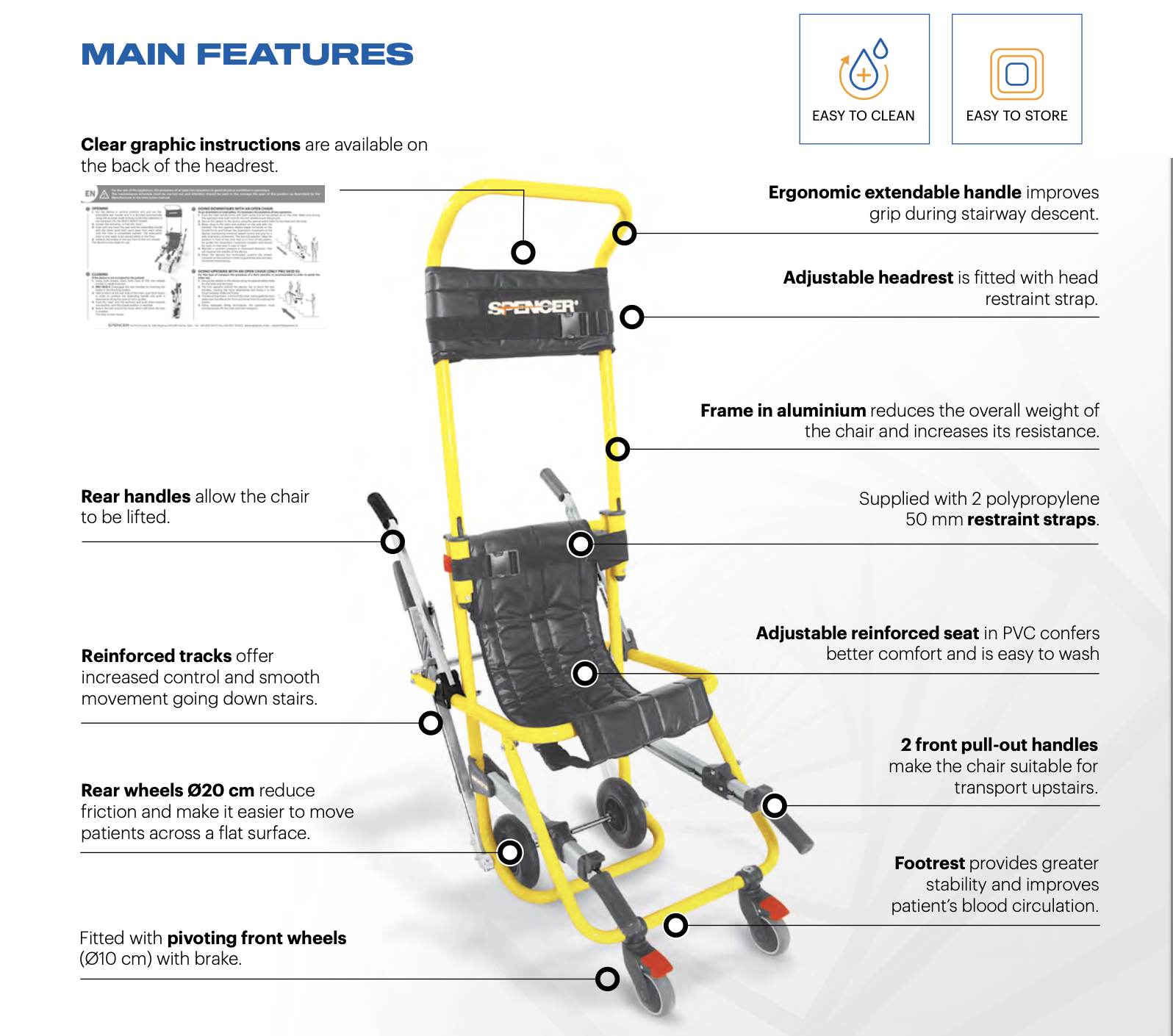
Different models of evacuation chairs offer a range of features. Below shows the features found in the Spencer PRO SKID-E Evacuation Chair, a compact folding chair designed to safely evacuate users in the event of an emergency.
How to use an Evacuation Chair
All evacuation chairs offer a range of different features. Always refer to the specific user guide provided with your evacuation chair for guidance on use.
The video on the right shows how to use the Spencer Evacuation Chair to safely evacuate users from a multi-storey building.
For advice on choosing the right Evacuation Chair for your workplace or building, please contact The Ramp People by calling +353 1 695 0520 or email [email protected]
At The Ramp People we offer delivery across Ireland.