


Wheel Stops & Parking Blocks Buying Guide
Rubber wheel stops and parking blocks are a popular choice for protecting EV charging points, walls and fences in car parks and driveways. The high visibility rubber blocks alert users when they are approaching the end of the parking bay, allowing the vehicle to safely stop prior to damaging their vehicle and surrounding structures.
This guide will walk you through everything you need to know before buying your wheel stop. We’ll look at what to check before shopping for a wheel stop, the types available and how to easily install your parking block. Whether you’re looking for a wheel stop for your driveway or you're installing wheel stops in a commercial car park, our guide has you covered.
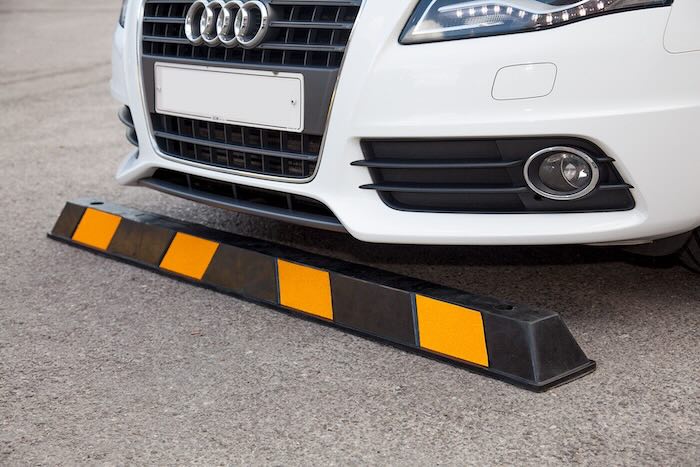
What To Check
Measure the width of the area or parking bay and the width of the vehicle, if for a specific car.
Consider where the wheel stops will be secured, for example on tarmac, concrete or block paving.
Most wheel stops are designed for cars and vans. For HGVs, higher wheel stops are generally recommended.
Things to consider
It is important that the wheel stops are highly visible, especially in public areas. A reflective surface is especially recommended if they will be used at night.
Rubber and plastic wheel stops are quick and easy to install with several fixings. Concrete and steel solutions generally require professional installation.
For use outdoors, it is recommended to purchase wheel stops which can withstand harsh weather conditions and UV exposure, for example rubber or concrete solutions.
For use in public areas such as car parks, schools and retail parks, durable rubber, concrete or steel solutions are recommended.
Standard rubber wheel stops suit cars and vans, while higher rubber solutions are used for HGVs. Concrete or steel options are available for heavy-duty use.
For semi-permanent use, for example when installing on rented driveways or land, look for a solution that can easily be uninstalled if required.
Types of Rubber Wheel Stops
- Available in 1650mm, 1830mm or 2000mm lengths
- Black and yellow with reflective stripes for high visibility
- 100mm high, designed for cars and vans
- Outdoor or indoor use, ideal for car parks and driveways
- Includes fixings for ease of installation
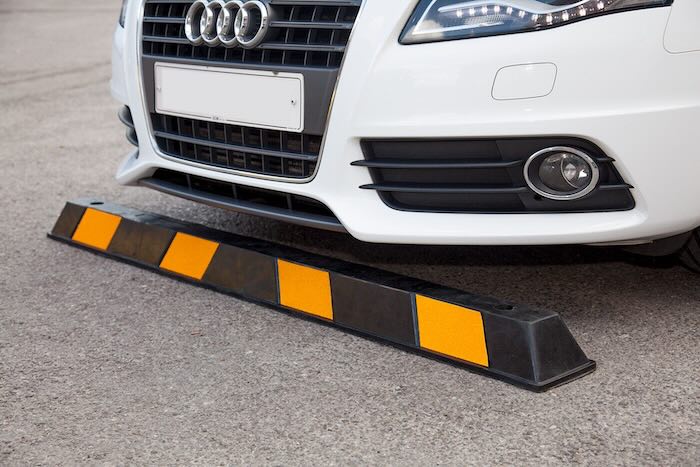
- Available in 1830mm length
- Black and yellow with reflective stripes for high visibility
- 150mm high, designed for HGVs and lorries
- Outdoor or indoor use, ideal for industrial estates
- Includes fixings for ease of installation
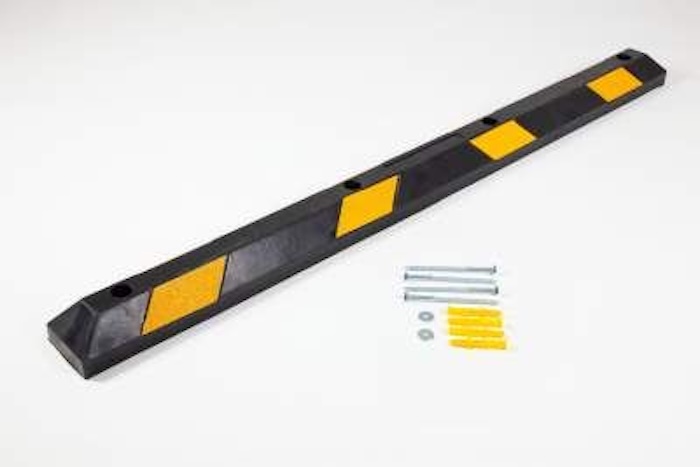
- Available in 550mm, 900mm or 1800mm lengths
- Black and yellow or white and black designs with reflective stripes for high visibility
- 100mm high, designed for cars and vans
- Includes fixings for ease of installation
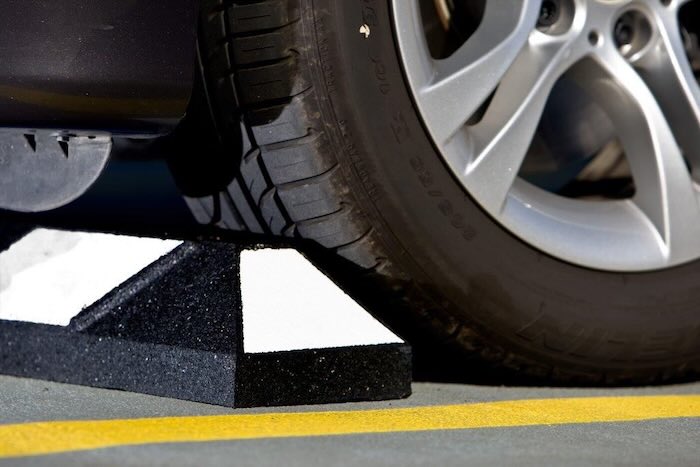
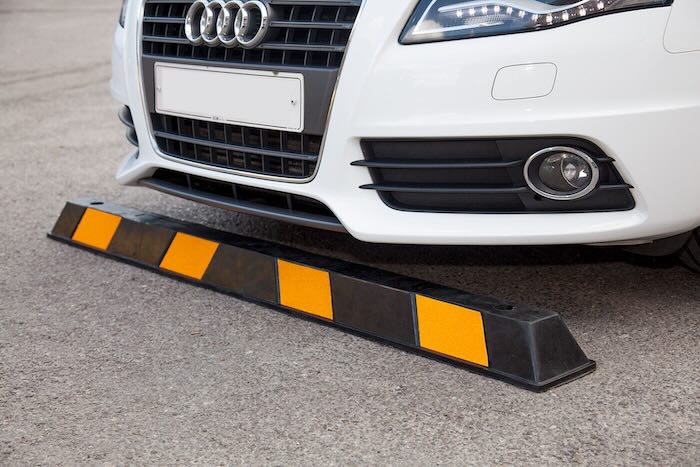
Rubber Wheel Stops
- 1650mm, 1830mm or 2000mm lengths
- Black and yellow with reflective stripes for high visibility
- 100mm high, ideal for cars and vans
- Weather resistant - indoor or outdoor use
- Includes fixings for ease of installation
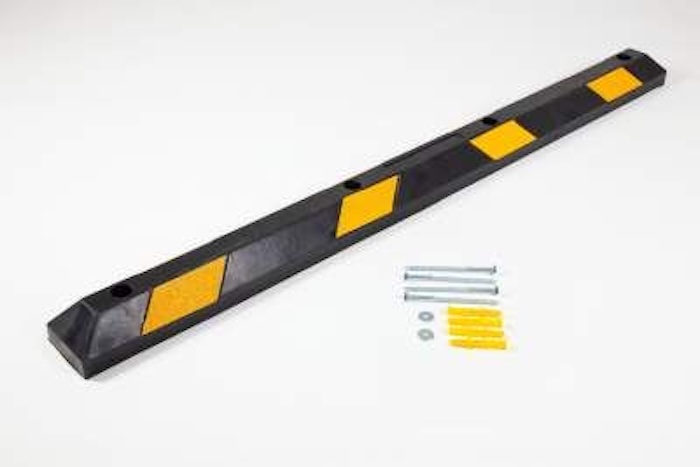
Truck & HGV Wheel Stops
- 1830mm - ideal for parking and loading bays
- Black and yellow, reflective stripes for high visibility
- 150mm high, designed for HGVs and lorries
- Weather resistant, ideal for industrial estates
- Includes fixings for ease of installation
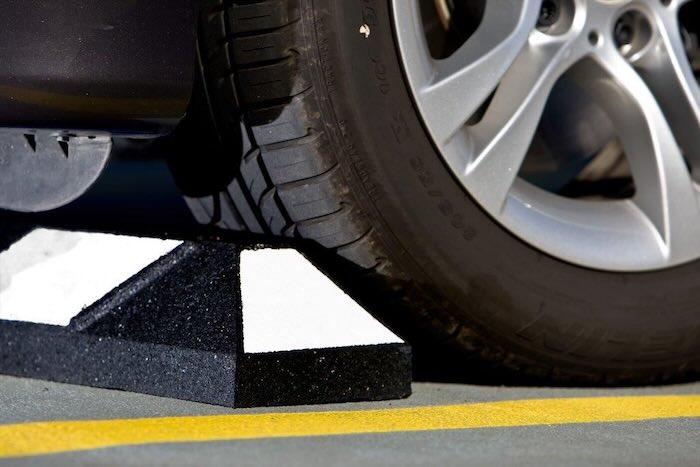
Premium Wheel Stops
- Available in 550mm, 900mm or 1800mm lengths
- Black and yellow or white and black designs with reflective stripes for high visibility
- 100mm high, designed for cars and vans
- Weather resistant - indoor or outdoor use
- Includes fixings for ease of installation
Care & Maintenance
- The majority of rubber wheel stops require little maintenance. They can simply be wiped or washed down when required if debris build up on the reflective surface.
- We recommend regularly checking the wheel stop and fixings for signs of damage and wear including cracks. If any concerns are noted please contact the manufacturer for advice to ensure the wheel stops are still safe to use.
- If the fixings do become loose, additional fixings can be purchased at a later date if required.
Installation
- Always ensure you have the landowner's permission prior to installing wheel stops and parking blocks.
- At The Ramp People all rubber wheel stops are provided with fixings for tarmac and concrete and a drill bit for ease of installation. The fixings are M10 x 180mm. The SDS drill bit has a diameter of 14mm and 150mm drill length, total length 276mm.
- Installation can usually be undertaken by a confident DIY'er, general handyman or builder.
- Before installation the parking blocks, make sure the road surface is flat, clean, dry and undamaged.
- Lay out your wheel stops in the desired installation area to ensure they fit comfortably within the available space and sit flat on the surface. Check that each stop is tight, well-aligned, and positioned correctly. Mark the substrate where the wheel stops will be drilled and fixed.
- You can then drill the holes either directly through the wheel stops’ pre-made fixing holes or remove the stops after marking the positions and drill the holes independently. We recommend drilling to a depth of approximately 180–200 mm. It is also advisable to drill a couple of test holes beforehand to confirm that your drill bit is the correct size for the material you are working with.
- Once the holes are drilled, ensure they are free from dust and debris. Insert the fixings and secure the wheel stops in place. We recommend using hand tools to avoid damage to the fixings; however, power tools may be used with caution. Take care not to over tighten the bolts, as any resulting damage is at the customer’s own risk.
Positioning & Use
- Wheel stops are regularly used in various locations including car parks, driveways, retail parks, schools and industrial estates. They are commonly used to protect EV charging points, walls and fences. They are also often used to prevent drivers from exceeding the length of the parking bay. Wheel stops can enhance car park safety by preventing vehicles from overhanging onto pavements, thereby protecting pedestrian pathways and reducing the risk of accidents.
- There is not any legal guidance around where wheel stops should be positioned. When planning installation, we recommend considering what you are protecting and the location. For instance, if you want to safeguard an EV charger or prevent car bumpers from overhanging onto a pavement, factor in the typical bumper overhang to ensure the wheel stop provides effective protection. It is important to ensure, where required, the area is still accessible to pedestrians and wheelchair users and do not create a trip hazard.
Request a callback
Still need assistance? Our team is available throughout the week to help via phone, email, live chat or WhatsApp. If you’d rather we call you, you can easily request a callback here.