

Anti-Slip Stair Treads & Nosing Solutions in Ireland – Ensuring Safety and Compliance
Stair nosing refers to the rounded, bevelled or squared end of the step. Stair treads are the flat area of the step which you place your foot onto.
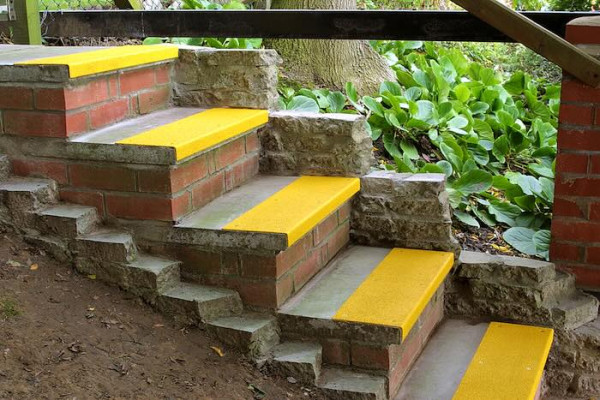
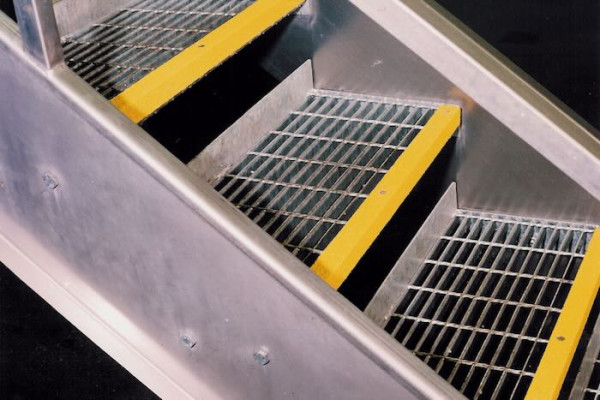
In schools, railway stations, public buildings, factories and offshore, anti-slip stair treads and anti-slip nosing are commonly installed as a way to reduce the risk for slips and falls.
Why Are Anti-Slip Stair Treads Important In The Workplace and Are They Required?
Anti-slip stair treads play a crucial role in improving stair safety and ensuring compliance with health and safety regulations. They provide reliable slip resistance in environments where steps are exposed to moisture or spills. This includes outdoor stairs that become slippery from rain, as well as indoor areas such as pubs, restaurants, factories, and commercial kitchens where drinks or liquids are often spilled. Installing high-quality anti-slip stair treads helps reduce the risk of slips, trips, and falls, creating a safer environment for both staff and visitors.
In the UK and Ireland, employers must reduce the risk of trips, slips, and falls at work. The Safety, Health and Welfare at Work Act 2005 state this. If needed, they must take action to fix these risks. Installing anti-slip stair treads is just one way employers can show they are taking steps to address the risks in the workplace.
When installing anti-slip treads and nosing, companies should refer to Part M and Part K of the Building Regulations. These parts explain the requirements for treads and nosing on stairs. It is important to manage health and safety while following these regulations. Technical Guidance Document M (TGD-M) requires easy access for those with disabilities and requires buildings to allign to BS 8300-2:2018 which stresses the need for low-profile slip-resistant nosing to help reduce trip hazards.
Installing contrasting stair nosing enhances step visibility, particularly for users with limited or poor eyesight, helping to further reduce the risk of trips and falls. In addition to improving safety, anti-slip treads and nosing also protect the underlying steps from wear and damage, extending their lifespan and reducing ongoing maintenance costs.
For flat areas that can get slippery, like wooden decks, walkways, and gangways, we suggest our anti-slip strips or anti-slip discs.


What Are The Legal Requirements Surrounding Stair Treads and Nosing?
Part M and Part K Building Regulations cover the requirements of stair treads and nosing in domestic and commercial properties. We recommend you refer to the regulations prior to installing stair treads and nosing as the regulations vary depending on whether you are installing these in a home, business or public area.
Key takeaways from Part M Building Regulations Ireland:
- All nosing should be clearly visible through contrasting material. Light Reflectance Value (LRV) between two surfaces should be greater than 30 points
- Nosing should be highlighted to ensure users can clearly see where to place their feet and avoid open rises
- Nosing should be between 50mm and 65mm wide on the tread
The Part M regulations in the UK also refers to BS 8300:2001 Design of buildings and their approaches to meet the needs of disabled people. Please note this standard was widthrawn in 2009, the current standard is BS 8300-2:2018. This is a code of practice which provides guidance on good practice in buildings. The codes of practice recommend using nosing of contrasting colours.


Which Stair Treads and Nosing Should I Purchase To Comply To Regulations?
For public and commercial spaces that are likely to become wet or slippery, it is advisable to install an anti-slip surface on both the treads and nosing.
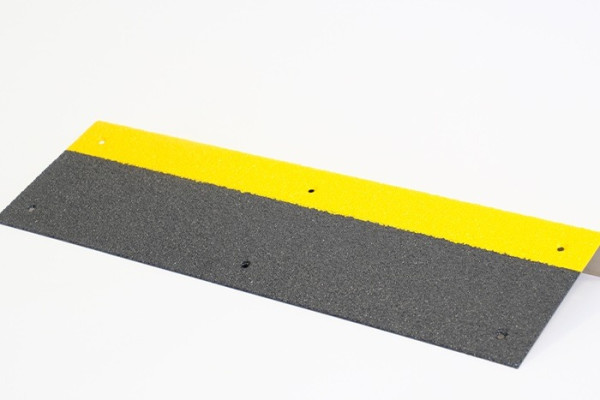
The nosing should be in a contrasting colour to the step for improved visibility. For example, if the step is black, a yellow nosing is recommended to create a clear contrast. In buildings other than dwellings, to comply with Part M and Part K Building Regulations, the nosing must be at least 55mm wide across both the stair tread and riser.
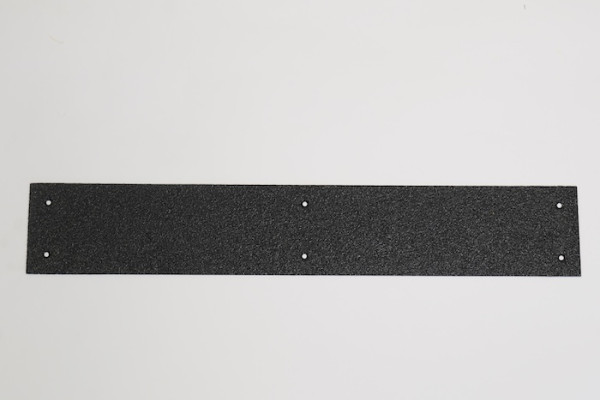
If you simply require anti-slip nosing, we offer black or yellow nosing which is 55mm x 55mm, in line with requirements. This is available in various lengths to meet your step width.
If you need anti-slip step tread covers with nosing, we recommend our contrasting anti-slip stair treads. These are especially beneficial in areas which can become slippery. The main tread is black whilst the 55mm high nosing is yellow to provide a contrasting design, as required by regulations.
When selecting your treads, consider the types of liquids or substances they may come into contact with, and choose materials suited to those conditions. Our anti-slip treads and nosing are resistant to weathering, chemicals, and UV exposure. Commonly used in the food industry, they also meet USDA requirements for incidental food contact and FDR CFR 21.175.300 standards for food-safe materials.
All stair tread and nosing solutions from The Ramp People feature an ultra-low-profile steel design (1–1.5mm thick) to minimise the risk of trip hazards.


What Material Are Anti-slip Stair Treads and Nosing Manufactured From?
Anti-slip stair treads and nosing are manufactured from a range of materials including wood, rubber, GRP, aluminium and stainless steel.
At The Ramp People, we offer the stainless steel solution with a grit surface. We find this the preferable choice as the extremely low profile assists in reducing trip hazards, especially for those with limited mobility. The durable steel design is long-lasting and effective in commercial settings and high pedestrian traffic areas.
How Do You Install Anti-Slip Stair Tread Covers and Nosing?
Anti-slip stair tread covers, anti-slip strips, and nosing covers are specifically designed to be fitted onto existing stairs, providing a quick and effective safety upgrade. Each cover comes with pre-drilled fixing holes for fast, simple installation, ensuring a secure fit and minimal downtime during setup.
Installation varies depending on whether you are assembling these onto a metal, wooden or concrete staircase. Please view our installation guide for full instructions.
What Maintenance Do Anti-Slip Stair Treads Require?
The design required virtually no maintenance; you only need to clean it. You can clean the anti-slip treads using a hose and general detergents. Simply wash off the detergents afterwards with water. Excess dirt can be removed using a hard broom.


At The Ramp People we offer a range of anti-slip stair tread and nosing covers along with anti-slip strips and discs in various sizes and colours. We deliver across Ireland. We also offer custom solutions on request. If you have any questions please reach out to our team at [email protected]